Since 1840, on the same corner.
The plaque out front says it’s the oldest continuously operating general store in North America, in its same location. Here is what that looks like from the inside.
Where history still lives.
The history here isn’t behind glass. You walk on it, open it and read it. Come in, have a look around, and tell us what you think.
The floors
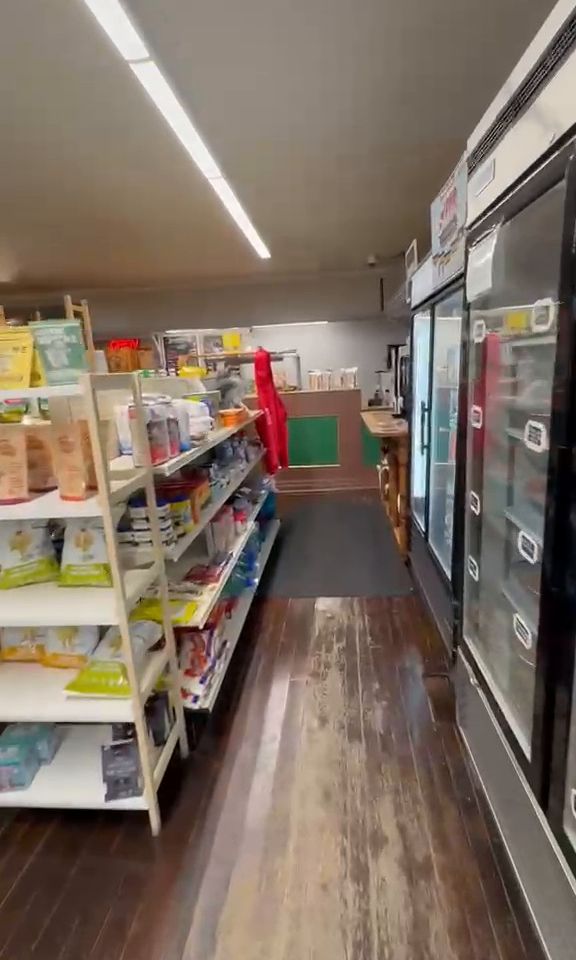
Original hardwood, blemishes and all. Asked separately what they notice most in this building, both of us gave the same answer: the floors, and the different types of wood planks.
The drawers
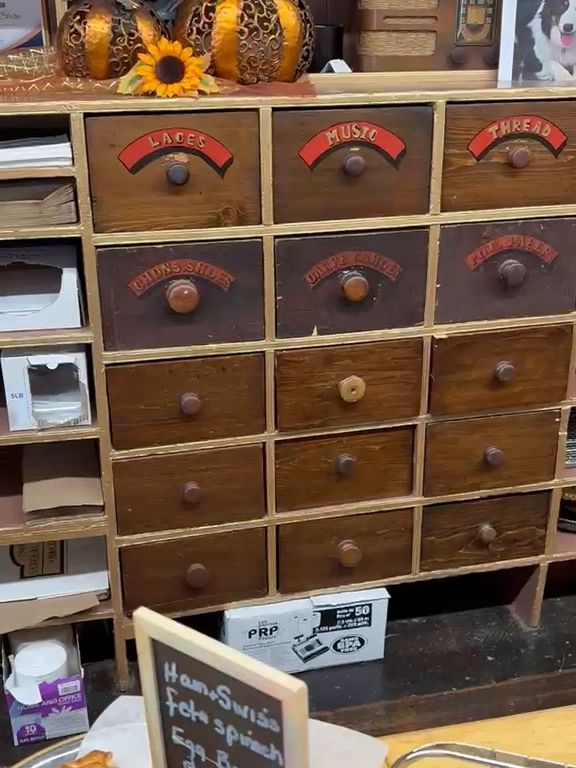
The original shelving and drawers, still in use.
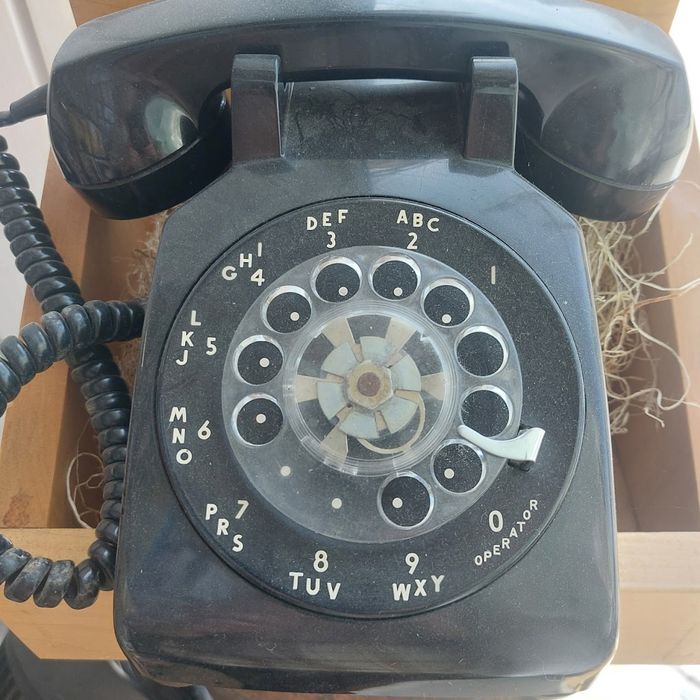
Older than the telephone
The store was open before the telephone was invented.
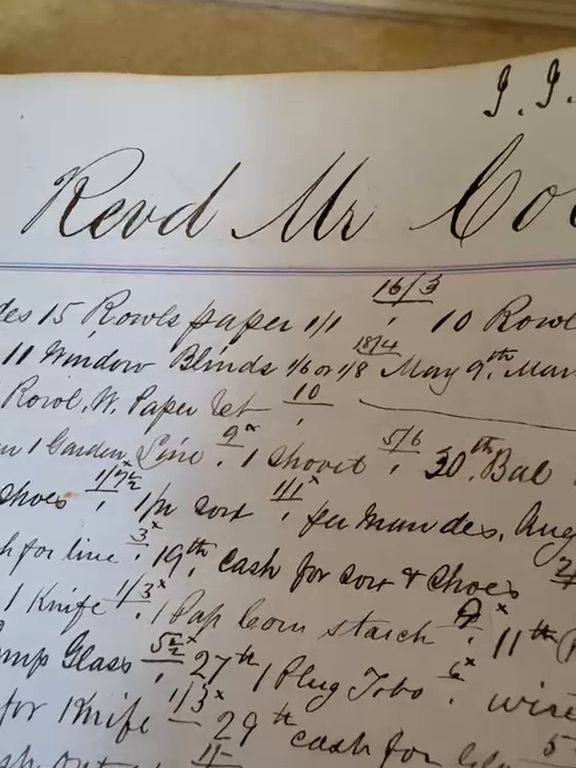
The 1862 ledger
Kept in pounds, shillings and pence, “because we were not Canada yet.”
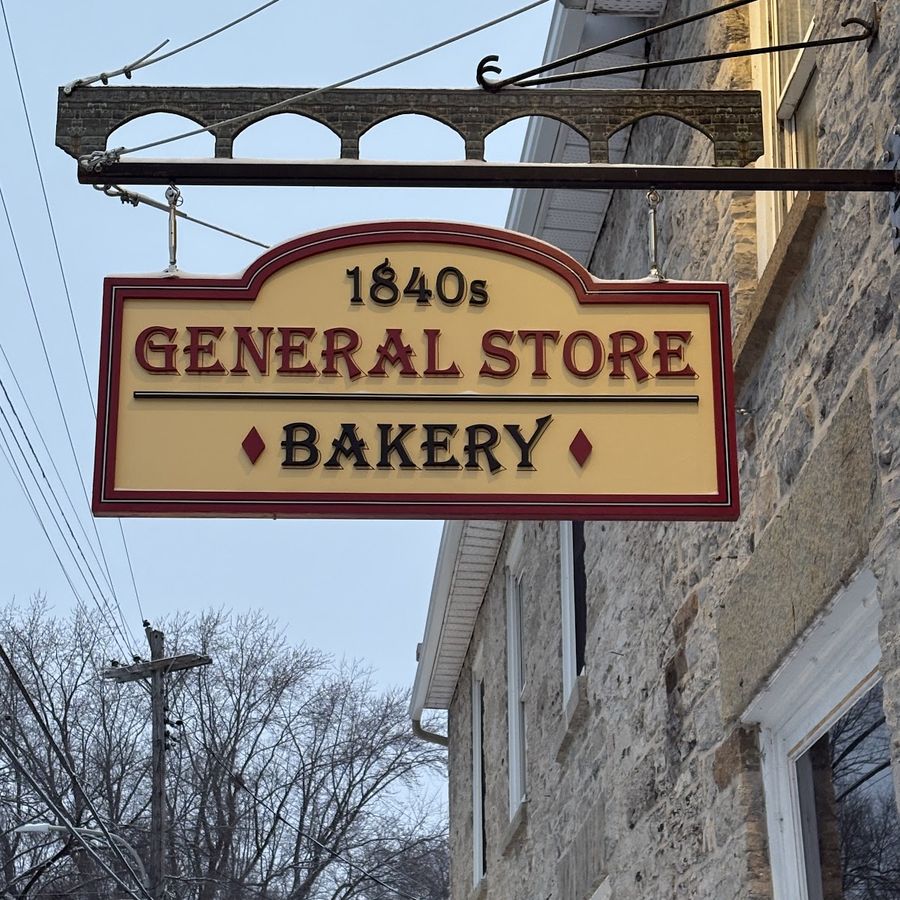
The sign
New, and hung by the current keepers themselves.
- The train. A 1953 set running the full way round the store, above the shelves.
- The horse. Mechanical. A quarter a ride.
- The Royal Bank calendar. Older than the one at the bank.
- The post office. This building was one. The mail slots came back as a donation.
- The ceiling. Look up: the holes and grates are where the potbelly stoves stood.
Thirteen names on the board by our door.
The store has been kept by a line of people, each for a while. Ours is the last name on the board. We don’t think of ourselves as the owners so much as the current keepers of a store that belongs to Pakenham.
- Archibald McArthur & Robert Brown 1840–1859
- Robert Brown –1876
- Robert Brown & David M. Scott –1879
- Robert Scott & William Halliday –1888
- Robert Scott & Son (Albert) –1905
- Albert, William L. & G. Harold Scott –1927
- William L. & G. Harold Scott –1947
- William L., G. Harold & Robert A. Scott –1964
- Robert A. Scott –1981
- John & Yvonne Hayes –1987
- Brian & Carol Bean –2002
- Rodney R. Bell –2021
- Wanda & Brian Clark today
As it reads on the board inside the store.
A building that lets us know.
The floors are original, and you can see the planks change under your feet as you walk from room to room. The building was not designed for a bakery, a deli cooler or a wash station, and it lets us know.
When it rains, the roof and the foundation still put up a fight. We fix what needs fixing and keep it going, for the town that built it.
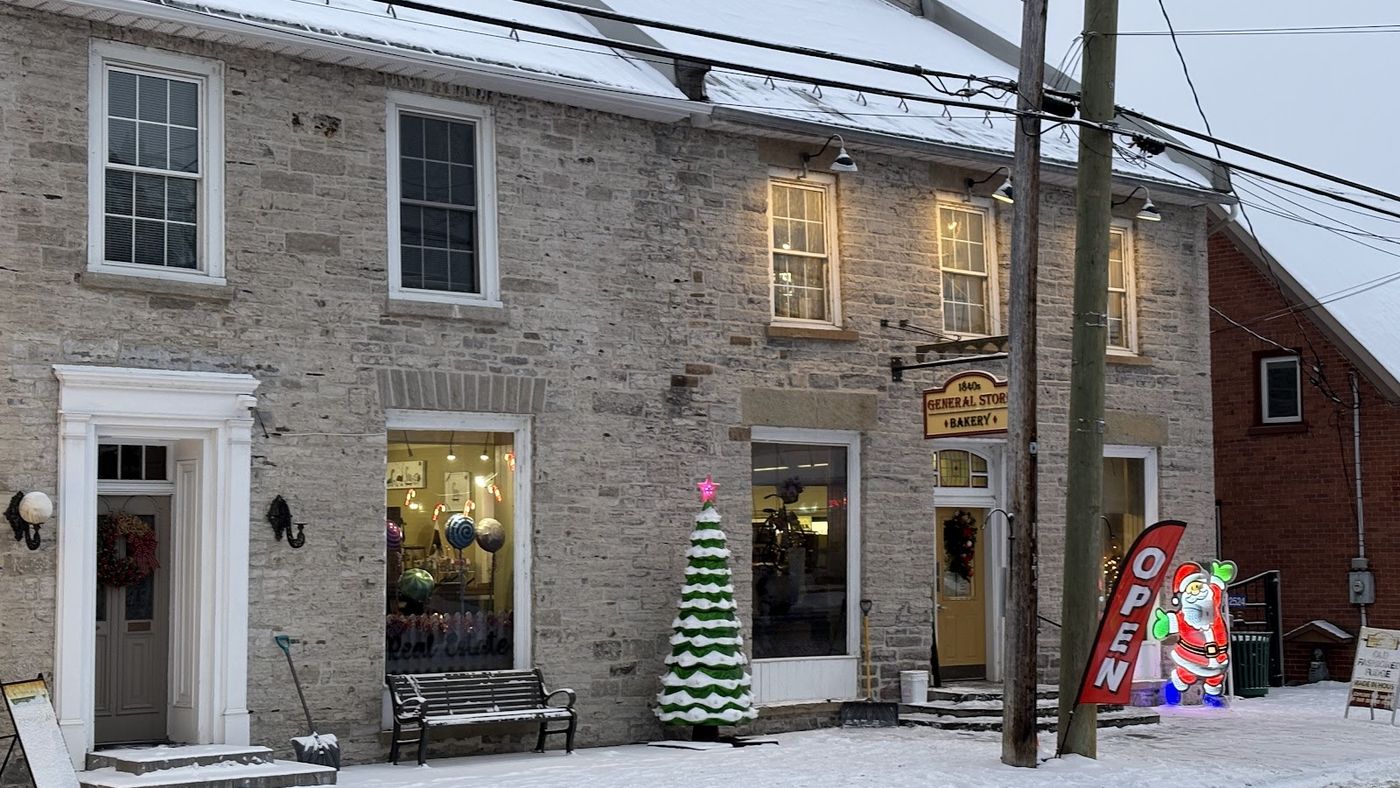
The village sees it as its own. So do we.
Can’t make it before we close? We leave your celery on the front stoop. You pay next time you’re in.
It has happened more than once. Nobody has ever not come back.
Lost cats, garage sales, the quilt show, the potluck on Macfarlane Street.
Village notices go up by the door, free, for as long as they need to.
The 1953 train, the old mail slots, the calendars and photographs: donated by neighbours, labelled with their names.
Not ours to sell or give away. We just keep them where everyone can see them.
Kept by the Clarks since 2021, the thirteenth name on the board by the door.
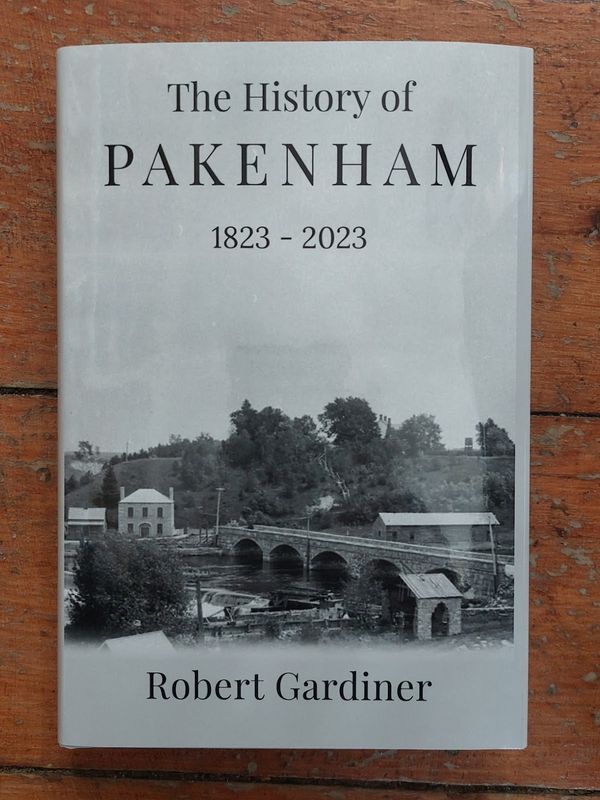
The History of Pakenham, 1823–2023.
The Bulletin’s page from the archives has a source: Robert Gardiner, a young village historian, and his book The History of Pakenham 1823–2023. It’s on the shelf upstairs, for anyone who wants to take a piece of the village home.